Wednesday
May232012

Not Long Now

Lectures are written, databases are downloaded and the bags are packed.  The start of the 2012 field season is just around the corner.  My favorite response when I tell people I'm off to dig?  "Oh, you are going to dig up dinosaurs!"  If only it were true!

I'm sharing here an interview with Daniel Master, one of the excavation's co-directors.  In it he talks a bit about how he got into archaeology and the lure of Ashkelon.

***

The BAR Dig Issue started it all. I had visited Israel before, but I had little idea how archaeological excavations worked. So I picked up a Dig Issue and looked at the options. Several excavations appealed to me; I applied to three. I later learned that dig applications were not particularly competitive, but what did I know? I set off for the first dig that accepted me: the Leon Levy Expedition to Ashkelon.

Ashkelon had a field school run by Harvard University, but aside from academics, the volunteers were housed in a lovely hotel near one of the nicest beaches in Israel. Who could ask for more?

When I got there, I found that things were even better than I had anticipated. My first morning in Ashkelon, the professor I had read about in BAR, Lawrence E. Stager of Harvard University, introduced himself: “Hi, I’m Larry. Welcome to Ashkelon.” In BAR, I saw the archaeologists as titans, but in Ashkelon the “luminaries” of the field simply treated us as part of the team.

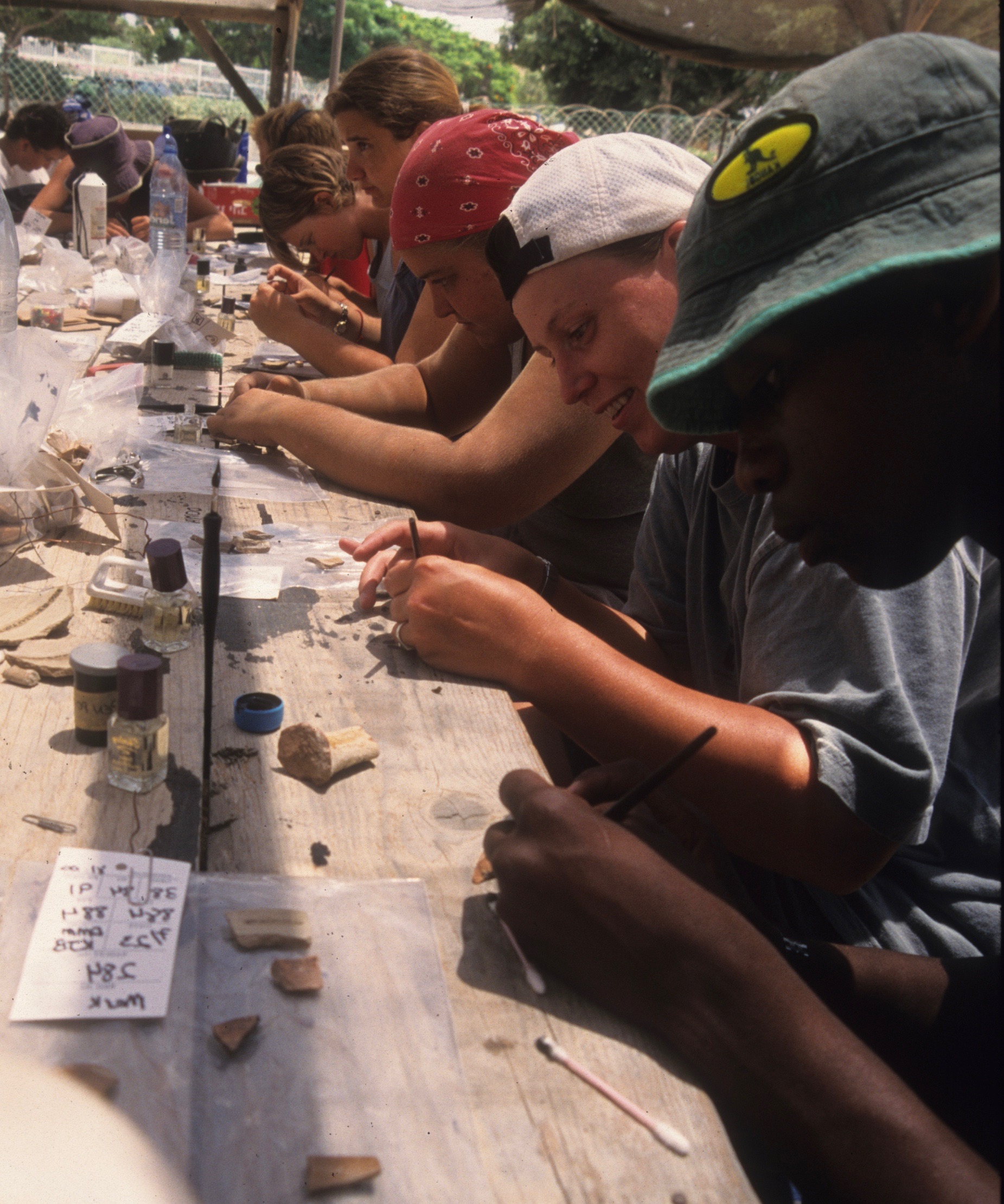
Looking back, I can see that early in that first summer I was already hooked. The fresh air, the outdoors, the physical exertion and the touch of the past kept me first to the field in the morning and last to the hotel in the afternoon. I remember the area supervisor wielding his trowel like a scalpel, scraping a little grey dirt from a little brown dirt, or making vertical sections of sand that were straighter than any soil I had ever seen. The process of archaeology was an art, not a quick and easy subject you could just learn about from a book, but a craft requiring years as an apprentice. I resolved to absorb all that I could, to make my sections straighter, my excava tion cleaner and my eye sharper. Even sweeping a dirt floor (again) or taking another pass with a pick was part of the larger process of becoming an archaeologist.

As soon as I returned home after that season, I already wanted to return. Fortunately for me, my parents indulged and the excavation accommodated.

Over the next few years, as I became the supervisor of a square, I saw that excavation was not just about the craft of digging. Now I was meeting the new volunteers and building them into a team; I was trying to piece together an intricate 50-square-meter three-dimen- sional puzzle with half the pieces missing. Now I was asking: How did this wall corner? Why does this floor stop here? Should we use a big pick or a brush for the next five centimeters? And, most impor- tant, how can I make sure that I write down enough that the next excavator will be able to reconstruct what I have uncovered?

Whether we were excavating a Roman bathhouse or the destruction of Nebuchadnezzar, all of us—staff and volunteers—were uncov- ering stories that had been hidden for millennia. Slowly, carefully, the history of the site was coming into focus. It was during these years that I decided that archaeology might be more than an avocation for me, so I began a graduate program in the subject. During my Ph.D. studies, I was challenged to use the clues from the field to uncover mysteries of the past and contribute to our common humanity.

Before I knew it, the years had passed, a few graduate papers had been written, and I was excavating not 50 square meters, but 400, and not as a student but as a teacher with my own students. I had finished my degree and moved to Wheaton College, a small school with a long history of archaeology. Once there, I saw the artifacts from Tell Dothan, a rich site in the West Bank that Wheaton had excavated but never published. Fortunately, a publication grant from the Shelby White-Leon Levy fund allowed us to put together a final report team, coincidentally made up entirely of people I met during my first season at Ashkelon. The publication process opened my eyes to another vista in archaeology. The objects yielded more and more with deeper study, and the digging, the records and the artifacts gained new life in the book, contributing even more to our under- standing of the past.

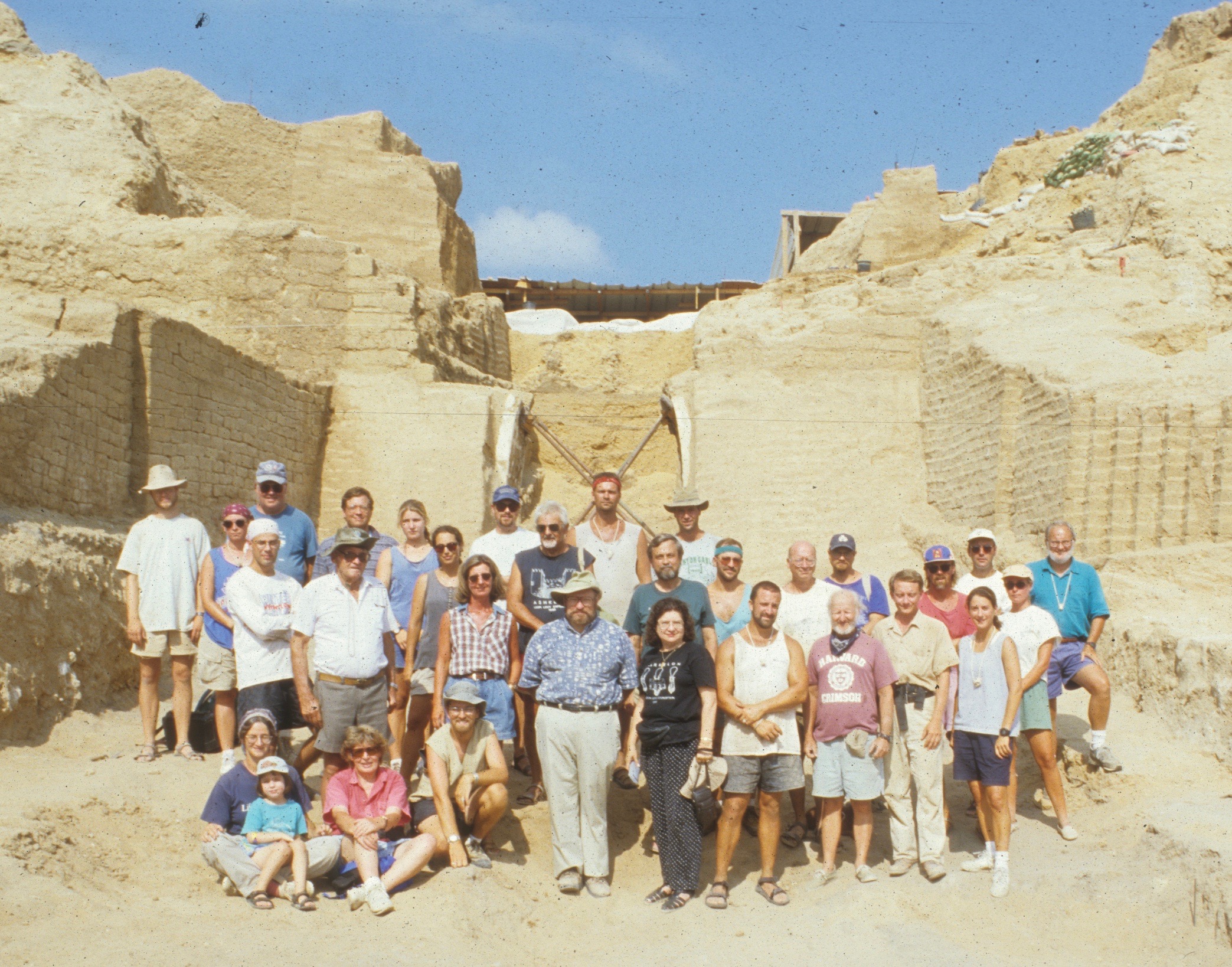
After Dothan, it was time to return to Ashkelon. With the help of a generous grant from the Leon Levy Foundation, we restarted the excavations at Ashkelon in 2007. It was another opportunity to be on an expedition with Larry, but now I would direct the new excava- tions while he would spearhead the publications. When I was a volunteer, I practiced the craft; as a square supervisor, I focused on the record keeping and teamwork; as a grid supervisor, I investigated the big puzzle; now, as a director, I set out to design a research program for the site of Ashkelon and build a team to carry it out.

As I stepped back and asked larger questions, I appreciated the uniqueness of Ashkelon: a Mediterranean seaport, one of the largest cities in the southern Levant, a city of merchants and gardens, and home to Canaanites, Philistines, Romans and Crusaders. I also gained a fuller appreciation for the work that happens before and after the season. Operating a dig is almost like running a small company dedicated to exploring the wonders of history, or, as my wife calls it, a second full-time job.

The final chapter has not been written. Larry and I have just finished our third season together as codirectors; the first two volumes of the Ashkelon final report appeared in 2008; and we look to the future with the continued partnership of the Leon Levy Foundation. Already our renewed excavations are rewriting the early history of the Philistines. More final report volumes are soon to appear, and more excavation seasons are planned. And this summer, the story will continue as many of you jump from the pages of BAR into an adventure of your own at Ashkelon.

Daniel M. Master is associate professor of archaeology at Wheaton Col- lege in Wheaton, Illinois. He began working at the site of Ashkelon as a volunteer in 1991 and now heads the project’s field operation.

***

Some will love it, some will not.  Everyone will be dirtier than they have ever been before.  Can't wait!  The plane leaves in 5 days!
Tuesday
May082012

Irene Levi-Sala Book Award Winner

The Leon Levy Expedition to Ashkelon is proud to announce that Ashkelon 3: The Seventh Century B.C. received a 2012 Irene Levi-Sala Book Award in the Final Excavation Report category.  Congratulations to Lawrence E. Stager, Daniel M. Master and J. David Schloen on this well deserved recognition.

Monday
Apr302012

And the Winner is...

Thanks to everyone who entered the contest.  We had everything from the practical and then the highly imaginative to the "I only wish it were possible and maybe it is" type of entries.  They were all a lot of fun to read and a great way to lead into the field season.  Due to the range of entries, I've picked a winner in each category.  Remember, fame and glory to all the winners.  And, if you find yourself in Ashkelon at the Dan Gardens Hotel, a non-alcoholic beverage of your choice.

First up, the practical submitted by a non-Ashkelonian regular.  Congratulations to Kirk!

*** Mount a nice wi-fi camera ($100) on a platform ($10) with additional illumination ($20) that can be manually lowered by rope ($10) from above. Have a wireless router ($50) positioned at the entrance of the sewer. The wi-fi camera and a laptop should be configured to connect to the router so that the laptop can control the wi-fi camera (e.g., zoom, 350 deg. pan, etc.). If the platform containing the wi-fi camera is sufficiently weighted, it shouldn't swing too badly or more thought could be given to stabilization.

I think you should do this in hopes of finding classical human excrement residue or other human waste that would wind up in a sewer. If you do, then there has to be loads of data lurking down there in the dark--like what people ate, types of work they did, common diseases/parasites they shared, etc.

cf. sewer work at Herculaneum.***


Second, the imaginative.  The winner should come as no surprise to those of us who know him.  Shimi take a bow!  Shimi's entry had me in stiches!

***"Method for the Removal of Culturally-Relevant Archaeological Product and State-Heritage Inhumed Trash from the Sewer in Grid 47 and the Subsequent Exploration Thereof

Reason for Exploring the Sewer:

The Glory of Prussia

Supplies Required:
TNT (several sticks)
Matches (1 book/box)
Heinrich Schliemann costume (1) [Optional: ‘precious artefacts’ (several)]

Approximate cost: $TBD, but presumably not too high – N.B. cost will be higher if ‘precious artefacts’ are to be ‘found’.

Method: Grid or square supervisor, dressed as Heinrich Schliemann, will by means of controlled detonations remove portions of sewer that pose danger of collapse, thereby preparing area for survey. Aforesaid supervisor will be first to survey excavated area and will ‘find’ ‘precious artefacts’. Photographs to be sepia toned and to feature local children in period dress for scale rather than meter sticks. Findings to be published in Jahrbuch der Preußischen Kaiserlichen Archäologischen Instituts***


And finally, last but definitely not least.  This winner should also come as no surprise and I offer my congratulations to Josh!  I too have been tempted to send the Josh Walton 3000 in to do some excavating but his Plan B isn't at all bad.

***The reasons for exploring the sewage system as Ashkelon should be fairly clear and straight forward. If we can trace the sewer system accurately it can help identify the city plan, and should help us locate places of interest for future excavations, such as major streets, large public buildings, etc. How to go about exploring the sewer system is a different issue entirely. While my initial thought was send a certain tunneling machine called the Josh Walton3000 to dig it out and record the findings, this approach has apparently been frowned upon. Therefore I have a second option. First we reenter the breach from last season with a laser measure (approx. $150 for mid end)  and a 2 million candlepower spotlight (Approx. $40). The spotlight can shine over 2 miles so should sufficiently light the opening down to a potential “turn” or “end.” Really long shovels can potentially used to clear away some of the accumulation for better visibility without going too far into the system. Then we use the laser measure to get a reading on the distance to the “turn.” Afterwards we bring in a GPR (variable cost, more if successful and we need it for more than a day), and hope that it can identify the signal of the sewer over the known area. If this is true, if we can identify a certain signature that is distinct, we could potentially use the GPR looking for that signature to trace the entire system.

Alternatively a night vision webcam attached to an all-terrain remote controlled monster truck and drive it through.***


Now we just need to see what the directors say!

Again, thanks to everyone who entered!  If we do somehow get into the sewer during the 2012 field season you can be sure we will blog about it.


Saturday
Apr212012

Suprise! It's an Ancient Bathouse

During the offseason, August through May, work at Ashkelon falls into the pleasing rythyms of scholarly research, the drawing of ceramic corpora and the daily maintenance of the site as well as the Ashkelon Lab.  While the pace might be slower there is still much to learn and discover.  And not just by the Leon Levy Expedition.  The ancient city of Ashkelon is now a National Park where visitors come to swim, camp or to spend a day wandering the ruins.  It is operated by the Parks Authority and sometimes they come across something interesting in the maintenance of the park.  Indeed, it is almost impossible to stick a shovel into the ground and not find something.

This winter while renovating the bathrooms on the South Tell, good news for those working in Grid 51, the Parks Authority uncovered the remains of what the Antiquities Authority has determined was probably a bath.  It's a fascinating discovery, this bath which stood on one of the highest points on the South Tell in a neighborhood that enjoyed unparalleled views of the sea.


This is a view of the bathrooms on the South Tell and the area of the Antiquities Authority's salvage excavation.


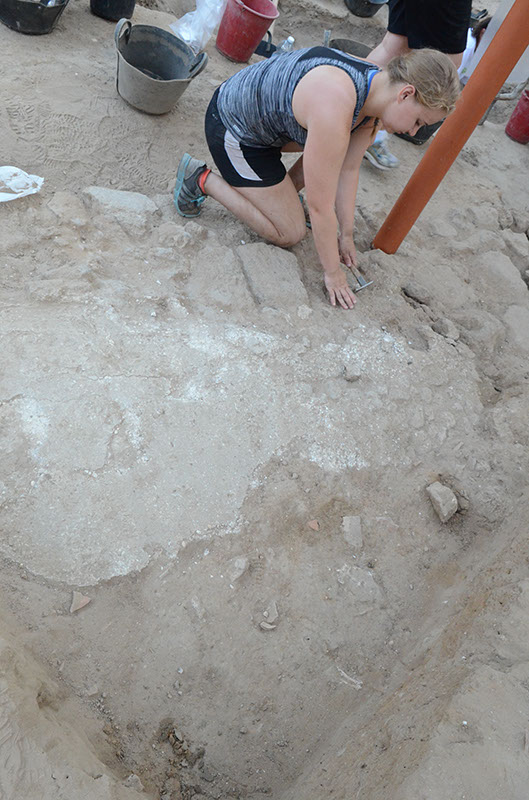
And here is a picture of the excavation.


What happens next remains to be seen but the discovery of the bath has already given us some important information about this area of the city.  With each such discovery we learn a bit more about ancient Ashkelon.


Friday
Apr132012

Adventure Looms

If your winter was anything like mine, it was a wonderful thing.  In fact, I'll willingly claim that my hometown didn't have a REAL winter -- not when we had more than a week of 80 degree weather in the middle of March. 

Naturally, the sun and warm temperatures turned my thoughts to Ashkelon as I was reminded of two of the many reasons I love what I do. 

You might say that the strange weather also reminded me of Ashkelon as we enjoyed some unusual weather of our own last summer.  I don't remember ever seeing the fog roll in as it did last summer when we would have been un- surprised to see zombies or some other fantastical creature come wandering out of the mist.  Fortunately, no such creature arrived to wreck havoc on our work but we did enjoy the strangeness of the moment.

So, you've submitted your paperwork and are wondering what you got yourself into?  We'll get into that over the next few weeks.  It starts with a first rate field school, which provides students with in-depth training and education in archaeological method and theory as well as the history and archaeology of Ashkelon and the Near East, and it continues with fun, a key component in any worthwhile education experience.  Finally, it ends with a summer's worth of memories that might warm your bones on a cold winter's day or maybe make you the most interesting person on Facebook -- for a second or two -- or perhaps, as it did for some of us still working at Ashkelon -- change your career goals.

Okay, on with the reading suggestions.  This time I am going old school.  So old school some of you might read this and roll your eyes but I have to do it.  Today I'm going with Agatha Christie.  If I want a fast read and one that makes me think of the Near East, she has three that stand out; They Came to Baghdad, Murder in Mesopotamia and, of course, Death on the Nile.  Another reason to think Agatha Christie?  The American Colony Hotel in Jerusalem, which has featured in at least one movie adaptation of a Christie book, and its timelessness.  The hotel is worth a visit if for no other reason then to peruse its Guest Book which contains the signatures of a veritable who's who of visitors to Jerusalem.  It's brunch is pretty good too.

I have my plane ticket.  Do you have yours?